Asphalt Sealcoating in Traverse City, MI for Driveways, Parking Lots & Private Pavement

Request a quote today for asphalt sealcoating in Traverse City, Grand Traverse County, Leelanau County, Benzie County, and surrounding Northern Michigan communities.

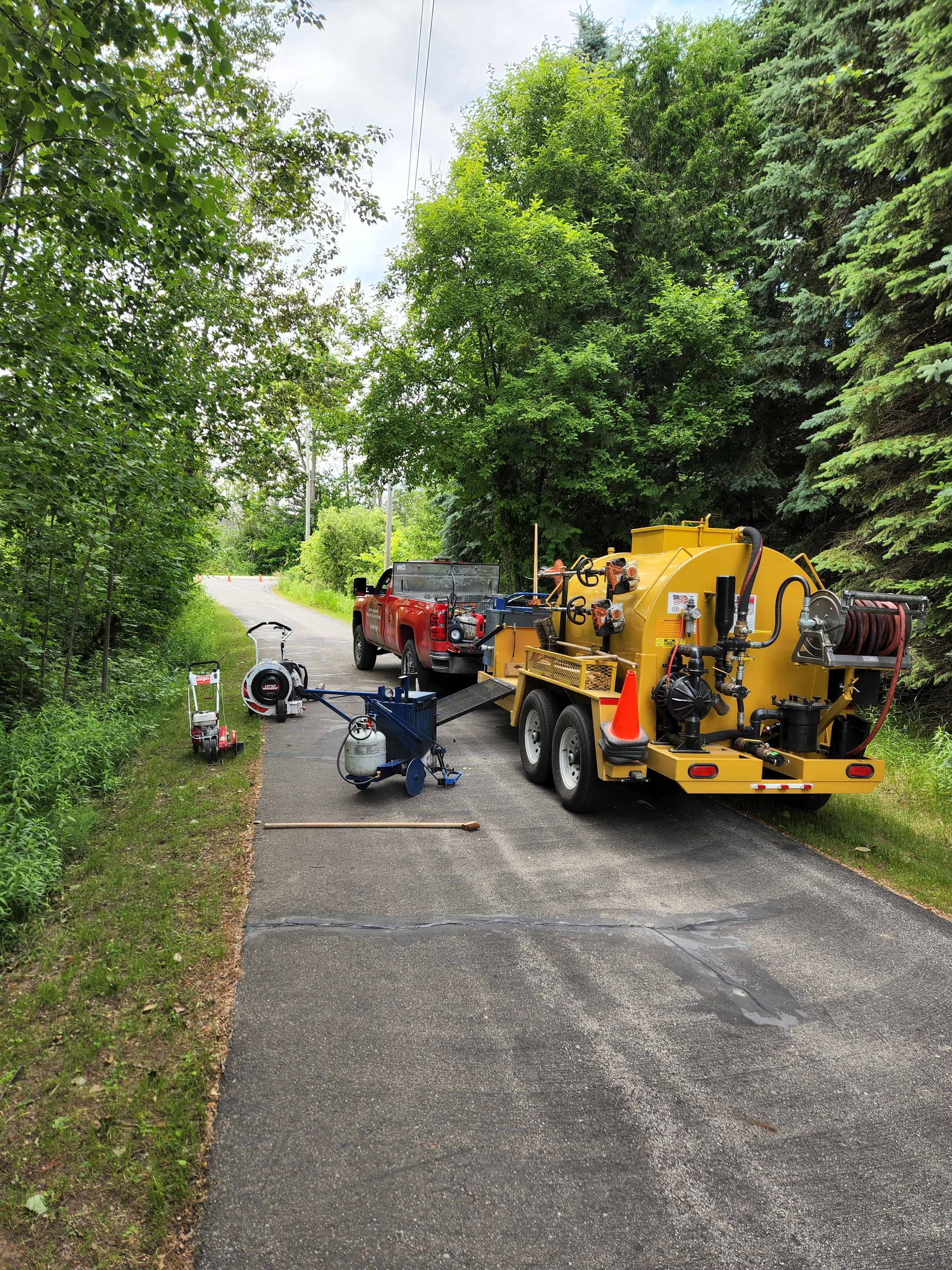
Grand Traverse Sealcoating & Striping professional equipment arriving for residential driveway sealcoating on Old Mission Peninsula in Traverse City, MI, utilizing the 6-Step Asphalt Armor System for maximum pavement protection.

Professional Asphalt Sealcoating in Traverse City & Northern Michigan

Protect your driveway or parking lot from Northern Michigan weather with professional asphalt sealcoating in Traverse City, MI. At Grand Traverse Sealcoating & Striping, we help homeowners and businesses defend their asphalt against oxidation, moisture intrusion, road salt, UV exposure, oil spots, and surface deterioration with a proven multi-step preservation process designed for local conditions.

If your asphalt is turning gray, drying out, losing flexibility, or developing surface cracks, sealcoating is one of the most cost-effective ways to protect your investment and extend pavement life. Our process goes beyond a quick spray-over. We clean, prep, treat stains, seal eligible cracks, and apply a premium asphalt emulsion sealer engineered for long-lasting protection and a deep black finish.

Eco-Friendly Emulsion Sealer
Silca Sand & Adherence Additives
Specialized Up-North Mix Design
HOA's & Private Roads
Commerical Parking Lots
Residential Driveways
2-YEAR "NO PEEL" ARMOR
BOND GUARANTEE
Protect Your Investment

Asphalt Sealcoating Protects, Preserves & Restores the Appearance of Driveways & Parking Lots

Asphalt sealcoating is not just about making pavement look dark again. It is a protective maintenance service that helps shield asphalt from water, oxidation, gas and oil drips, de-icing salts, and daily wear. For properties in Traverse City and across Northern Michigan, sealcoating plays an important role in slowing down surface aging before small problems turn into larger repairs.
Our team provides driveway sealcoating and parking lot sealcoating for residential and commercial properties throughout Traverse City, Grand Traverse County, Leelanau County, Benzie County, and surrounding Northern Michigan communities. Whether you need to freshen curb appeal at home or protect a customer-facing commercial lot, our goal is the same: deliver a cleaner, longer-lasting, better-protected asphalt surface.

👉 Why Asphalt Sealcoating Matters in Northern Michigan

Northern Michigan asphalt takes a beating. Between long winters, freeze-thaw cycles, moisture, UV rays, road salt, traffic, and petroleum drips, unprotected asphalt gradually dries out, fades, becomes brittle, and starts to crack. Once water gets into those cracks and reaches the base, damage accelerates.

Sealcoating provides a protective barrier over the asphalt surface, helping to:

✅ Slow oxidation and surface aging
✅ Reduce damage from water intrusion
✅ Help resist gas and oil spotting
✅ Defend against de-icing salt exposure
✅ Improve the appearance of faded pavement
✅ Support longer asphalt life through preventative maintenance

For homeowners, that means better curb appeal and better long-term driveway preservation. For commercial properties, it means a cleaner appearance, a more professional first impression, and a smarter pavement maintenance strategy.

Residential Driveway Sealcoating
Traverse City, Michigan

Your driveway is one of the first things people notice about your home. A faded, dry, cracked driveway can make the entire property look older and less maintained. Our driveway sealcoating service helps restore that dark, clean appearance while adding an important layer of protection against the elements.

We work with homeowners across Traverse City and surrounding Northern Michigan communities to preserve asphalt driveways with a detailed, start-to-finish process that includes edging, cleaning, crack preparation, oil spot treatment, crack sealing when needed, and a premium sealcoat application. The result is a driveway that looks sharper, protects better, and is easier to maintain over time.

✅ This service is ideal for:

👉 Faded blacktop driveways
👉 Driveways with minor to moderate crack development
👉 Vacation homes and cottage properties
👉 Homeowners wanting to improve curb appeal
👉 Property owners looking to avoid premature asphalt deterioration

Commercial Parking Lot Sealcoating
Traverse City, Michigan

Commercial asphalt needs more than a cosmetic refresh. It needs a maintenance plan. Parking lot sealcoating helps protect the surface, improve property appearance, and support a more professional experience for customers, tenants, and visitors.

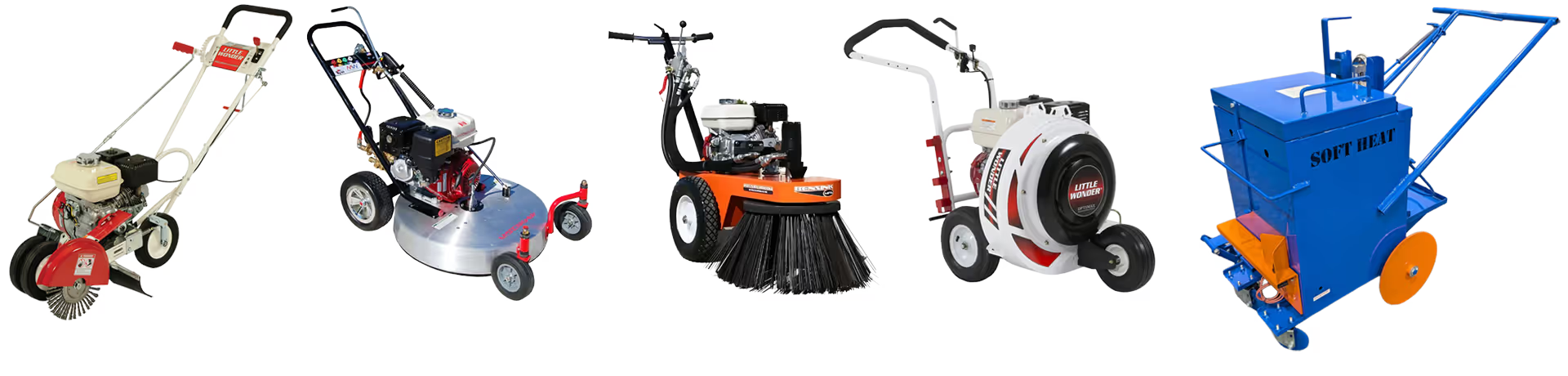
Our commercial parking lot sealcoating service is ideal for retail properties, offices, multifamily properties, associations, churches, industrial sites, and other commercial locations across Traverse City and Northern Michigan. We handle the prep work, crack sealing, surface protection, and, when needed, coordinate the lot for a cleaner and more uniform finished result.

Benefits of commercial sealcoating include:

✔️ Improved curb appeal and property presentation
✔️ Better surface protection from weather and traffic
✔️ Slower surface oxidation and wear
✔️ Support for long-term pavement preservation planning
✔️ A more complete finish when paired with crack sealing and striping

What Sealcoating Can and Cannot Fix

Sealcoating is a protective maintenance service, not a structural rebuild. It is best for asphalt that is fundamentally sound but beginning to show age, fading, and surface-level wear.

Sealcoating is a good fit for:

✅ Faded asphalt
✅ Mild to moderate surface wear
✅ Eligible cracks within sealable range (1/8" or less)
✅ Preventative maintenance for driveways and parking lots
✅ Improving appearance while protecting the surface

Sealcoating is not the right solution for:

❌ Large structural cracksBase failure
❌ Severe alligator cracking
❌ Deep and minor potholes
❌ Major drainage or sub-base issues

For larger failures, asphalt repair or remove-and-replace work is the better long-term fix before sealcoating is considered. Your repair matrix in the PDF supports making this distinction clearly on the page.

Eco-Friendly Emulsion Sealer
Silca Sand & Adherence Additives
Specialized Up-North Mix Design
HOA's & Private Roads
Commerical Parking Lots
Residential Driveways
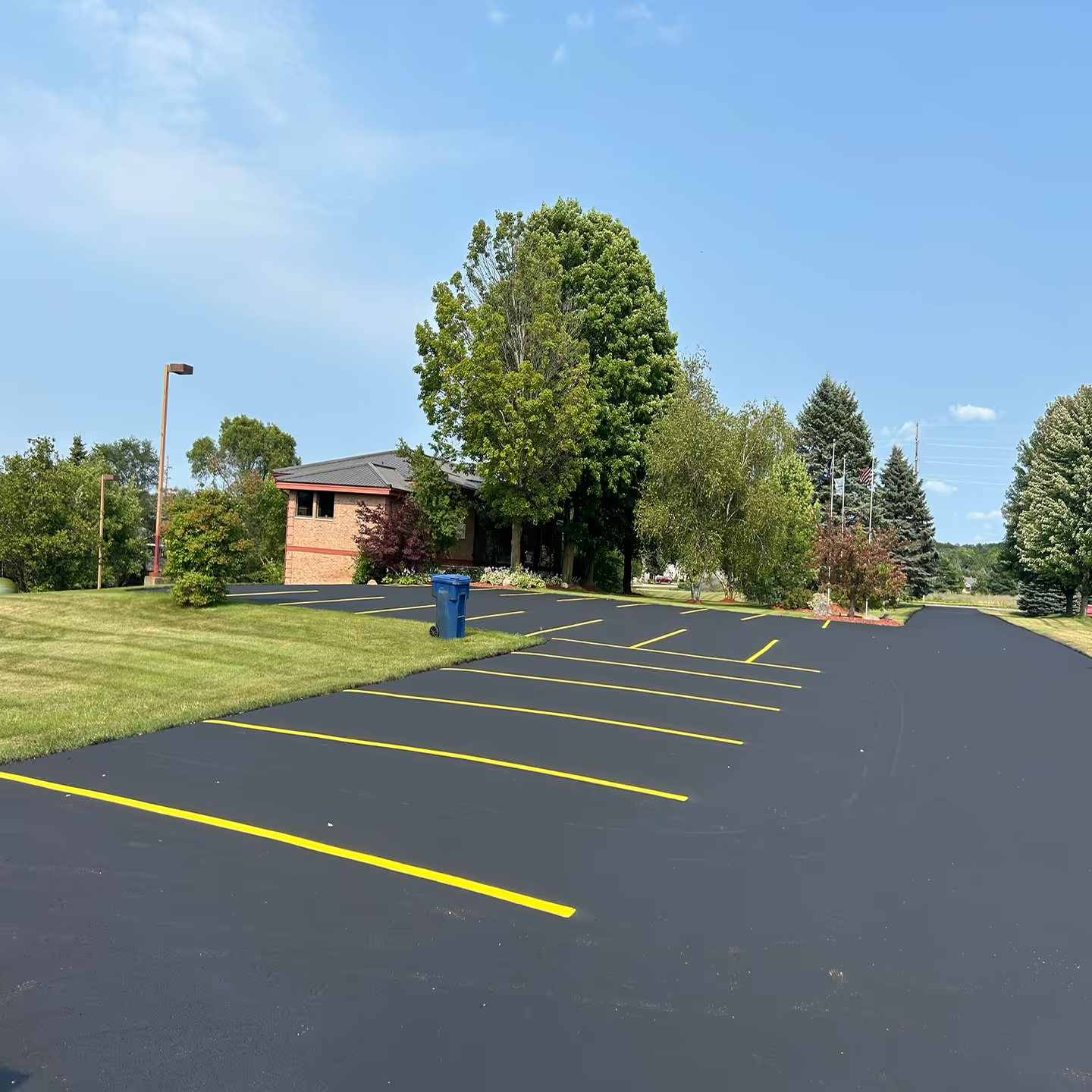
Professional HOA asphalt sealcoating at Garfield Condominiums on Hemingway Lane in Traverse City, MI, showcasing a fresh jet-black protective finish and phased lane application to maintain resident access.
Local Crew - Northern Michigan Focus

What Makes Our Sealcoating Different

Not all sealcoating jobs are equal. Many contractors focus on speed. We focus on preparation, proper materials, and results that hold up better over time.

✅ Thorough Surface Preparation

The quality of a sealcoating job is largely determined before the sealer is ever applied. That is why we emphasize edging, hydro-cleaning, debris removal, crack prep, and stain treatment rather than simply coating over contamination.

✅ Premium Michigan-Made Asphalt Emulsion Sealer

We use a Michigan-Made eco-friendly high-quality, heavily fortified asphalt emulsion sealer with silca sand and hardening additives rather than low-end, heavily diluted material.

✅ Technical Asphalt Sealer Mix Design Breakdown

👉 500 Gallons Michigan-Made SafeSeal Emulsion Sealer

✔️ 10% (50 Gallons) Water - (Prevents Flash Drying)
✔️ 250 LBS Silica Sand - (Provides Traction)
✔️ 5 Gallons Black Elixir - (Accelerates Drying)
✔️ 5 Gallons Iron Road - (Improves Oil & Fuel Resistance)

✅ Hot Rubber Crack Sealing

We do more than seal the surface. We address qualifying cracks (1/8" up to 1" width) with professional-grade hot rubber crack sealant to help reduce water entry and support a longer-lasting result.

2-YEAR "NO PEEL" ARMOR
BOND GUARANTEE

Our 6-Step Asphalt Armor System

Step 1
Precision Driveway Power-Edging

We use power-edging equipment to remove grass, soil, and organic buildup along the edges of the asphalt. This creates a sharper, cleaner border and helps the sealer reach the pavement edge more effectively. A properly edged driveway or lot not only looks better, it also helps reduce edge-related deterioration.

Step 2
Deep Hydro-Cleaning and Scrubbing

Adhesion starts with cleaning. We use pressure washing and surface cleaning methods to remove dirt, moss, flaking old material, and other buildup that can interfere with the bond between the asphalt surface and the new sealcoat. Clean pavement gives the sealer a much better surface to grab onto.

Step 3
Industrial Crack and Surface Preparation

We take time to prep the surface correctly before coating begins. That includes clearing debris from cracks and problem areas using wire wheels, blowers, and heat-based prep when needed. Proper surface prep is one of the biggest differences between a quick cosmetic job and a professional sealcoating service built to last.

Step 4
Oil and Gas Neutralization

Oil and gas spots can cause sealcoating failure if they are ignored. We treat contaminated areas with specialized primer so the new sealcoat has a better chance to bond evenly and maintain a more consistent finish.

Step 5
380° Hot-Applied Rubber Crack Sealing

We use professional hot rubber crack sealant for cracks that fall within the proper repair range (1/8" up to 1" width). This flexible material helps block water infiltration while moving with changing temperatures.

Step 6
SafeSeal™ Armor Application

We apply a premium asphalt emulsion sealcoat designed to protect the pavement surface while delivering a rich, dark finish.

Why We Use Eco-Friendly Sealer

Coal Tar vs Asphalt Emulsion Sealer

If you are comparing coal tar and asphalt emulsion for driveway or parking lot sealcoating in Traverse City, the biggest difference is safety, environmental impact, and long-term suitability for Northern Michigan conditions. At Grand Traverse Sealcoating & Striping, we use SafeSeal™, a Michigan-made asphalt emulsion designed for the Great Lakes region. It delivers the rich black finish property owners want while avoiding the high PAH content, strong odor, and brittleness commonly associated with coal tar-based sealers.

What Is the Difference Between Coal Tar and Asphalt Emulsion Sealer?

The main difference between coal tar and asphalt emulsion sealers comes down to what they are made from and how they perform over time.

Coal tar sealer is a byproduct of coal processing. It has traditionally been used because of its dark appearance and surface durability, but it also contains high levels of PAHs (Polycyclic Aromatic Hydrocarbons). These compounds have raised major environmental and health concerns, especially as the product wears down into dust that can be tracked indoors or washed into nearby storm drains, lakes, and streams.

Asphalt emulsion sealer is made from asphalt, water, and performance additives. It is a modern alternative that offers strong protection, a deep black finish, and better flexibility without the same level of environmental concern tied to coal tar products.

For homeowners and commercial property owners in Traverse City, asphalt emulsion is the smarter choice because it is better suited for the climate, safer around people and pets, and more aligned with protecting Northern Michigan’s natural environment.

👉 What Are PAHs and Why Do They Matter?

PAHs, or Polycyclic Aromatic Hydrocarbons, are chemical compounds created during the burning or processing of certain materials such as coal and tar. They can also be found in things like vehicle exhaust and smoke.

The concern with coal tar sealers is that they contain much higher concentrations of PAHs than asphalt emulsion products. As the sealer wears down over time, those particles can end up in dust, soil, and water. That is why many property owners, municipalities, and contractors now prefer lower-PAH alternatives.

If your goal is to protect your pavement while making a better decision for your family, customers, and the surrounding environment, asphalt emulsion is the clear choice.

Why Grand Traverse Sealcoating & Striping Uses SafeSeal™

At Grand Traverse Sealcoating & Striping, we use SafeSeal™, a Michigan-made asphalt emulsion manufactured in Grand Rapids and designed for the humidity, temperature swings, and freeze-thaw cycles of the Great Lakes region.

We chose SafeSeal™ because it gives our customers the performance they expect from a professional sealcoating application without the drawbacks of coal tar. It is a better fit for residential driveways, commercial parking lots, schools, restaurants, and other properties where safety, appearance, and environmental responsibility all matter.

Why Asphalt Emulsion Is the Better Choice for Northern Michigan

👉 Better for the Enviroment

One of the biggest concerns with coal tar sealer is its high PAH content. As coal tar ages and breaks down, particles can become part of the surrounding dust and may be tracked into homes and buildings. This is one reason many property owners are moving away from coal tar-based products.

SafeSeal™ asphalt emulsion is a lower-odor, nearly PAH-free alternative that is better suited for spaces where families, children, customers, and employees are present. It also avoids the harsh chemical exposure and skin irritation often associated with coal tar products.

For residential driveways, schools, restaurants, and customer-facing commercial properties, asphalt emulsion is the safer and more responsible option.

👉 Strong Performance Without the Brittleness

Many people assume coal tar is automatically the tougher option, but modern asphalt emulsion technology has changed that. Today’s premium asphalt emulsions can match or exceed coal tar in overall appearance, flexibility, and real-world performance.

SafeSeal™ provides a deep, jet-black finish while staying more flexible through temperature changes. That flexibility matters in Northern Michigan, where pavement expands and contracts through repeated freeze-thaw cycles. When a sealer becomes too brittle, it is more likely to flake, crack, or wear unevenly.

Because asphalt emulsion remains more compatible with the pavement underneath it, it is better able to move with the surface instead of fighting against it. That makes it a more reliable long-term choice for Michigan asphalt.

👉 Designed for Michigan Weather

Not every sealer is built for the same conditions. Products that perform well in one region may not be the best option in another. That is one reason we use a Michigan-engineered product formulated specifically for the Great Lakes climate.

SafeSeal™ is made in Grand Rapids and designed to handle the humidity, moisture, and temperature swings that are common across Michigan. From hot summer sun to spring moisture and winter freeze-thaw stress, it is built for the real conditions your driveway or parking lot experiences here in Northern Michigan.

That local fit matters. A regional product paired with proper surface preparation and professional application helps create a more dependable finished result.

⭐ Coal Tar vs ASphalt Emulsion: Side by Side Comparison ⭐

When comparing the two sealcoating options, asphalt emulsion stands out in the areas that matter most to homeowners and businesses in Traverse City.

Coal Tar Sealer

Made from a coal processing byproduct
❌ Contains high levels of PAHs
❌ Strong odor and harsher handling characteristics
❌ Can become brittle over time
❌ Greater environmental concern as it wears down

Asphalt Emulsion Sealer

Made from asphalt, water, and additives
✅ Much lower PAH content
✅ Lower odor and safer overall application environment
✅ Flexible performance in freeze-thaw conditions
✅ Better suited for environmentally conscious property owners

For most residential and commercial properties in Northern Michigan, asphalt emulsion is the more balanced choice for safety, appearance, and climate performance.

Our Traverse City & Northern Michigan Asphalt Sealcoating Featured Projects

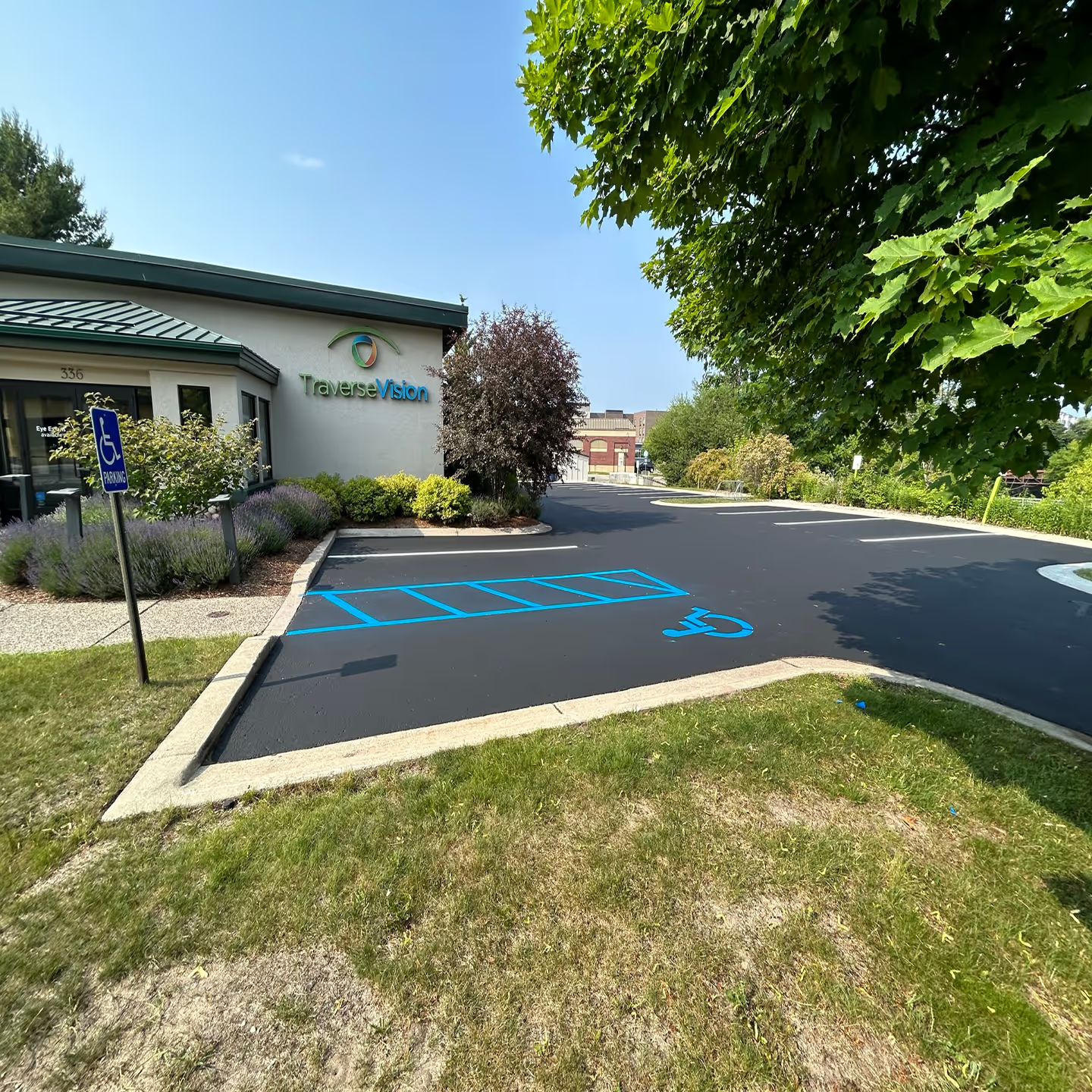
Traverse Vision
Parking Lot Sealcoating & Striping
Traverse City, Michigan
Grand Traverse County
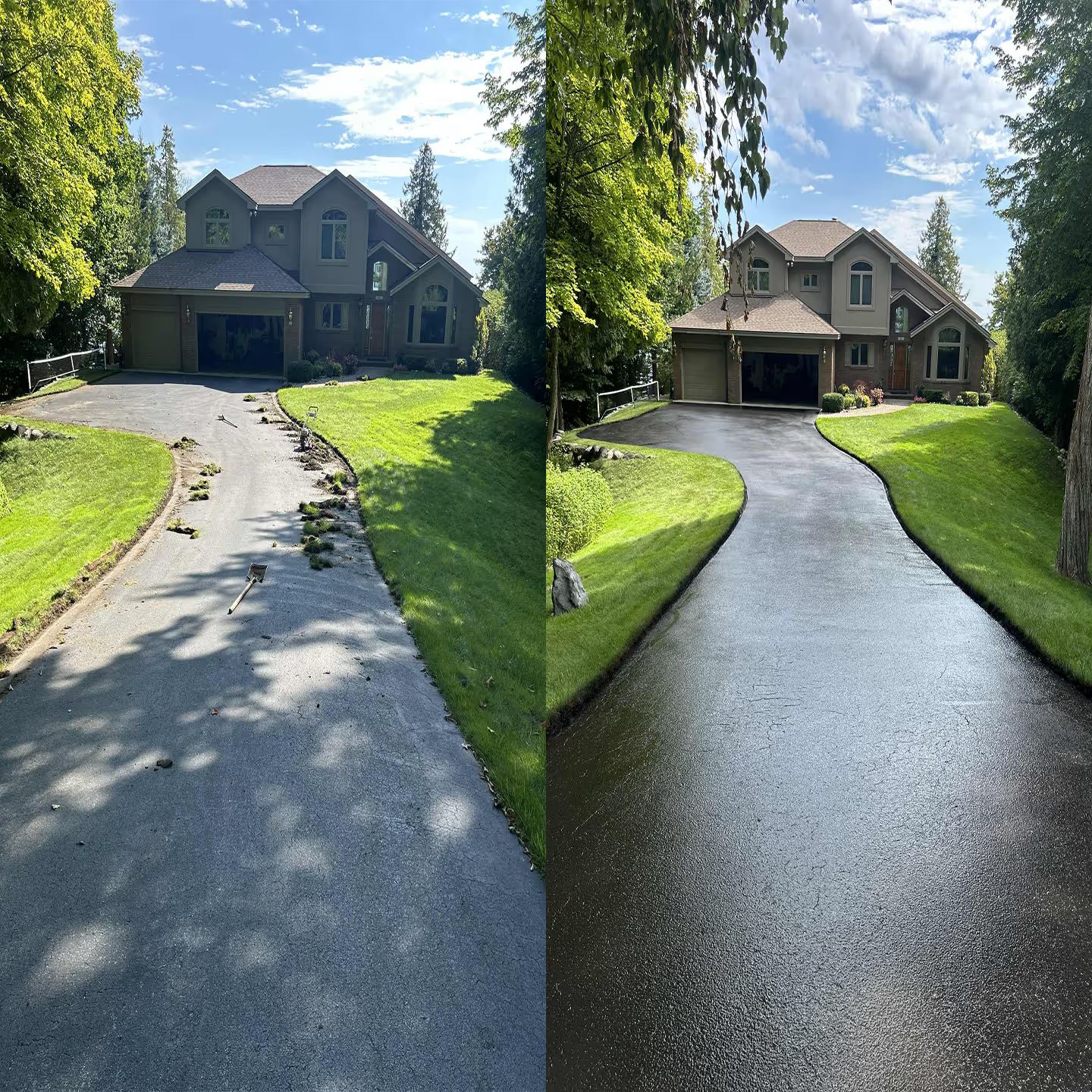
Driveway Sealcoating
Old Mission Peninsula, Michigan
Driveway Sealcoating
Northport, Michigan
Driveway Sealcoating
Northport Village Office
Parking Lot Sealcoating
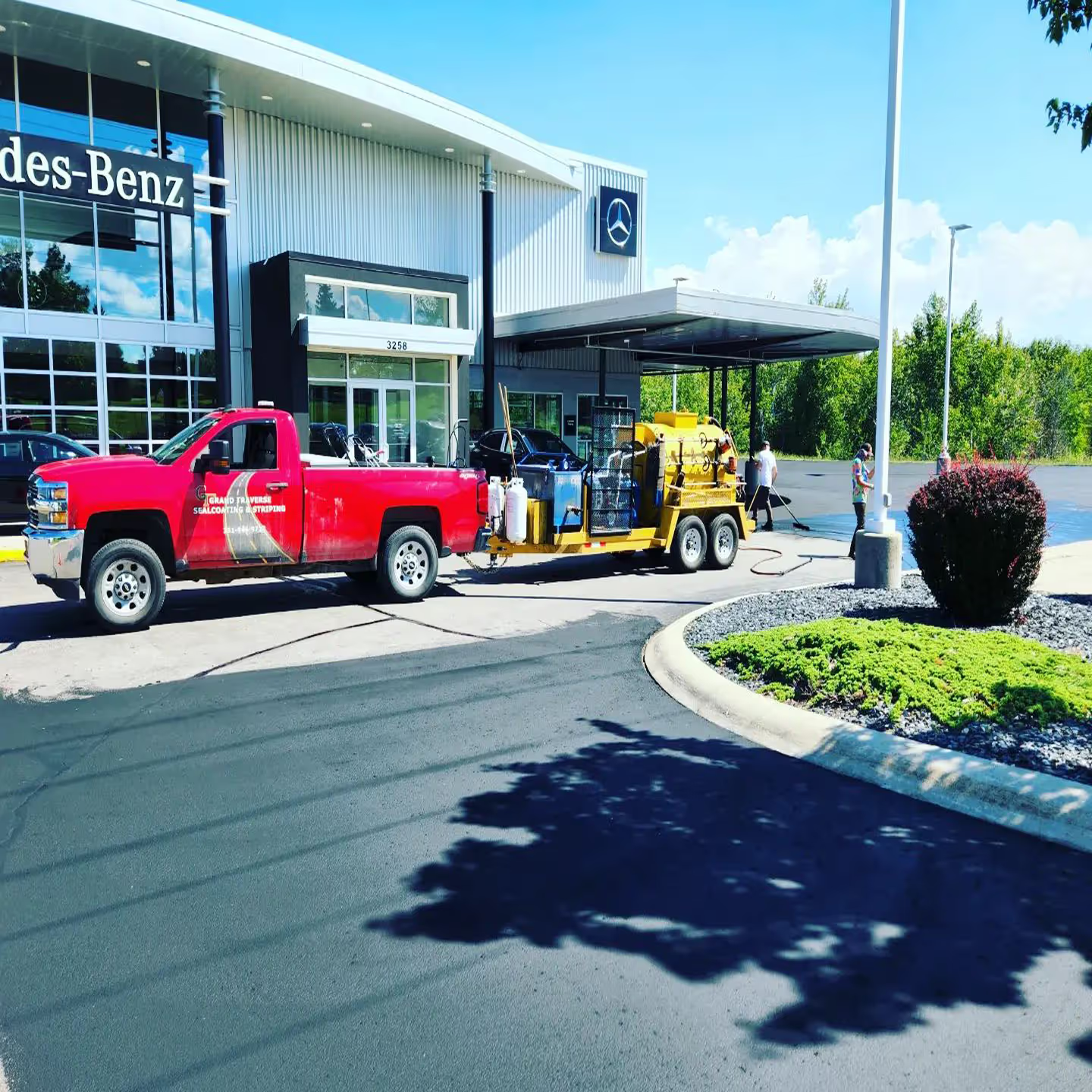
Mercedes-Benz
Parking Lot Sealcoating
Traverse City, Michigan
Advanced Financial Group, Inc.
Parking Lot Sealcoating & Striping
Traverse City, Michigan
Driveway Sealcaoting
Nature & Me RV
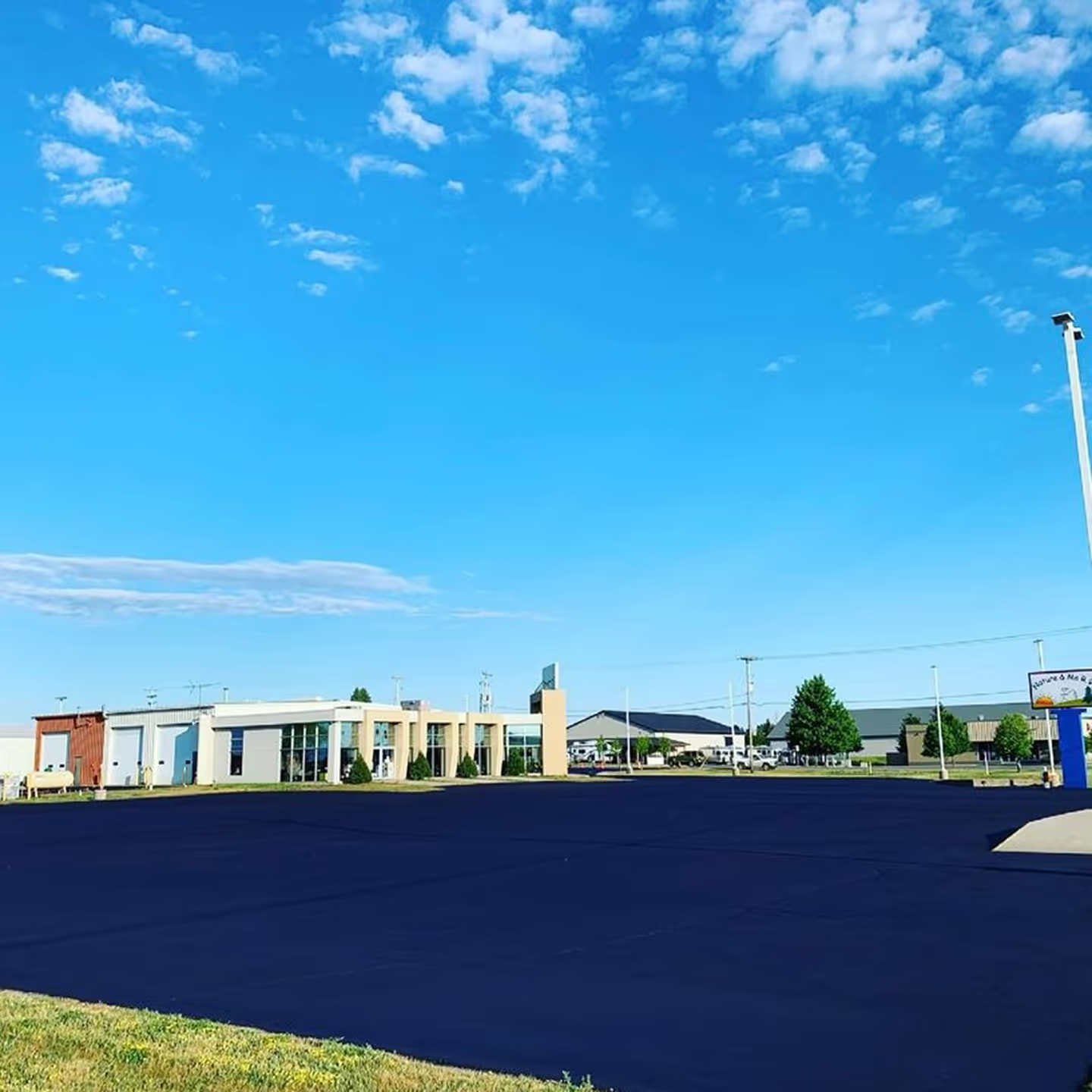
Parking Lot Sealcoating
Traverse City, Michigan
10+
Years of experience
4.9/5
Regional Trust Rating
7K+
Asphalt Surfaces Protected
2
Year "No Peel" Guarantee
Asphalt sealcoating financing options in Traverse City, Michigan, showing Wisetack monthly payment plans on a smartphone next to a project invoice.

Flexible 12-Month 0% Interest Financing

We make it easier to protect your asphalt investment with 12-month 0% interest financing. You can apply right from your quote, review your options, and choose the payment plan that works best for your budget.

✔️ Apply directly from your quote
✔️ 12-month 0% interest financing
✔️ Straightforward online process
✔️ Review options before moving forward
✔️ Budget-friendly payment flexibility
✔️ Get your project completed sooner

Driveway Maintenace Tips

Keep your driveway looking pristine and jet-black for years to come by following these simple, expert-led maintenance strategies.

Save Energy with Smart Pool Tech · Ecofriendly

Discover how smart pool technology can help you save energy and reduce costs while enjoying your pool.

Read this article

Turn Your Backyard into a Luxury Spa

Learn how to create a relaxing spa-like atmosphere in your backyard with essential features and design tips.

Read this article

Why Choose Grand Traverse Sealcoating & Striping?

Choosing the right sealcoating contractor is about more than price. It is about process, prep, materials, reliability, and knowing the job was done correctly.

👉 Detailed multi-step prep instead of a fast “splash and dash” application
👉 Professional crack preparation and hot rubber crack sealing
👉 Premium, eco-friendly asphalt emulsion sealer
👉 Custom mix design with added traction and performance additives
👉 24-hour cure and access control
👉 Residential and commercial experience
👉 Local reputation built across Northern Michigan
👉 2-year "no peel" guarantee

When property owners want asphalt sealcoating done right in Traverse City, they want a contractor who understands the difference between a cheap surface refresh and true pavement preservation. That is the difference our process is built to deliver.

Trusted Materials Used in Our 6-Step Asphalt Armor System

At Grand Traverse Sealcoating & Striping, we believe long-lasting results start with using the right materials. That is why our 6-Step Asphalt Armor System is built around professional-grade, non-coal tar asphalt sealcoating materials designed for durability, faster curing, deeper color, and better long-term protection. We do not believe in cutting corners with low-grade products. We use trusted materials that help asphalt stand up to Northern Michigan weather, traffic, oil drips, UV exposure, and freeze-thaw cycles.

✔️ Commercial-grade asphalt emulsion sealcoating products
✔️ Non-coal tar materials for a safer, cleaner approach
✔️ Additives selected for faster curing and stronger performance
✔️ Rich black finish for better curb appeal
✔️ Better resistance to water, oxidation, fuel, and chemical exposure

⭐ Safe Seal® Commercial Grade Asphalt Sealer

The foundation of our sealcoating system is Safe Seal® Commercial Grade Polymer Fortified Asphalt Sealer. This professional asphalt emulsion sealer is designed to protect pavement from the most common causes of asphalt deterioration. It helps guard against moisture penetration, oxidation from UV rays, freeze-thaw cracking, and damage from oil and chemical spills. It also delivers the clean, dark appearance property owners want after a professional sealcoating application.

✅ Helps block surface water and moisture intrusion
Protects against sun damage and oxidation
Helps reduce damage from Michigan freeze-thaw cycles
Adds protection from oil, fuel, and chemical spills
Creates a deep black, professionally sealed appearance
Polymer-fortified for stronger long-term performance

Non-Coal Tar Protection You Can Feel Good About

We use a non-coal tar asphalt emulsion, not an outdated coal tar-based sealer. That matters because many property owners today want a product that offers strong pavement protection while also being a better fit for residential and environmentally sensitive settings. According to the attached product material, Safe Seal® is low VOC, low odor, non-flammable, and free of the carcinogenic materials associated with coal tar sealers.

✔️ Non-coal tar formula
✔️ Low VOC content
✔️ No strong harsh fumes or obnoxious odor
✔️ No solvents, asbestos, lead, or mercury listed in product notes
✔️ Lower PAH formula compared to coal tar options
✔️ Good fit for homeowners and businesses s that want a safer choice

⭐ IRON ROAD™ Seal Coat Additive
All States Coating Logo

To strengthen our asphalt sealcoating system even further, we use IRON ROAD™ Seal Coat Additive. This professional-grade copolymer emulsion is designed to enhance asphalt emulsion sealers by improving curing speed, adhesion, toughness, aggregate suspension, and resistance to chemicals and traffic wear. For customers, that means a sealcoat system that is built to perform better under everyday conditions.

✅ Helps the sealer dry faster and cure tougher
Improves adhesion and overall durability
✅ Enhances aggregate suspension for a more even finish
✅ Produces a deeper black sealcoat appearance
✅ Improves resistance to oil, fuel, grease, and chemicals
✅  
Useful on both residential driveways and commercial parking lots
Helps reduce downtime so sealed asphalt can return to service sooner

⭐ Black Elixir™ Sealing Additive

All States Coating Logo

We also use Black Elixir™ Sealing Additive as part of our material system when needed to improve cure time and finished performance. The attached material describes it as a specially blended co-polymer emulsion created to modify asphalt sealers for faster curing, stronger adhesion, deeper color, and improved resistance to oils, fuels, grease, and chemicals. This makes it especially useful where appearance and faster turnaround both matter.

✅ Provides up to 80% faster curing time
✅ Helps create outstanding toughness and adhesion
✅ Improves aggregate suspension
✅ Produces a deeper jet-black finish
✅ Helps resist oils, fuels, grease, and chemical exposure
✅ Can help reduce tracking and support a cleaner finished job

Why Material Quality Matters in Asphalt Sealcoating

Not all asphalt sealcoating jobs are created equal. The difference often comes down to the quality of the materials being applied. A professional sealcoating system needs products that bond properly, cure correctly, resist wear, and protect the pavement from the elements. That is why our 6-Step Asphalt Armor System is built around trusted sealcoating materials instead of generic bargain-grade coatings.

👉 Better materials help create longer-lasting sealcoating results
👉
Faster curing means less downtime for your driveway or lot
👉
Better adhesion helps the sealcoat hold up under traffic
👉
Stronger chemical resistance helps protect against fuel and oil damage
👉
Deeper black finish improves appearance and curb appeal
👉
Reduces premature wear between maintenance cycles

Service Area for Asphalt Sealcoating

We provide asphalt sealcoating services in Traverse City, MI and surrounding counties, including:

✔  Grand Traverse County
✔  Leelanau County
✔  Benzie County
✔  Kalkaska Couny
✔  Antrim County
✔  Wexford County
✔  Manistee County

If you are searching for driveway sealcoating near Traverse City, parking lot sealcoating in Northern Michigan, or dependable asphalt maintenance for a home, business, cottage, or vacation property, our team is ready to help.

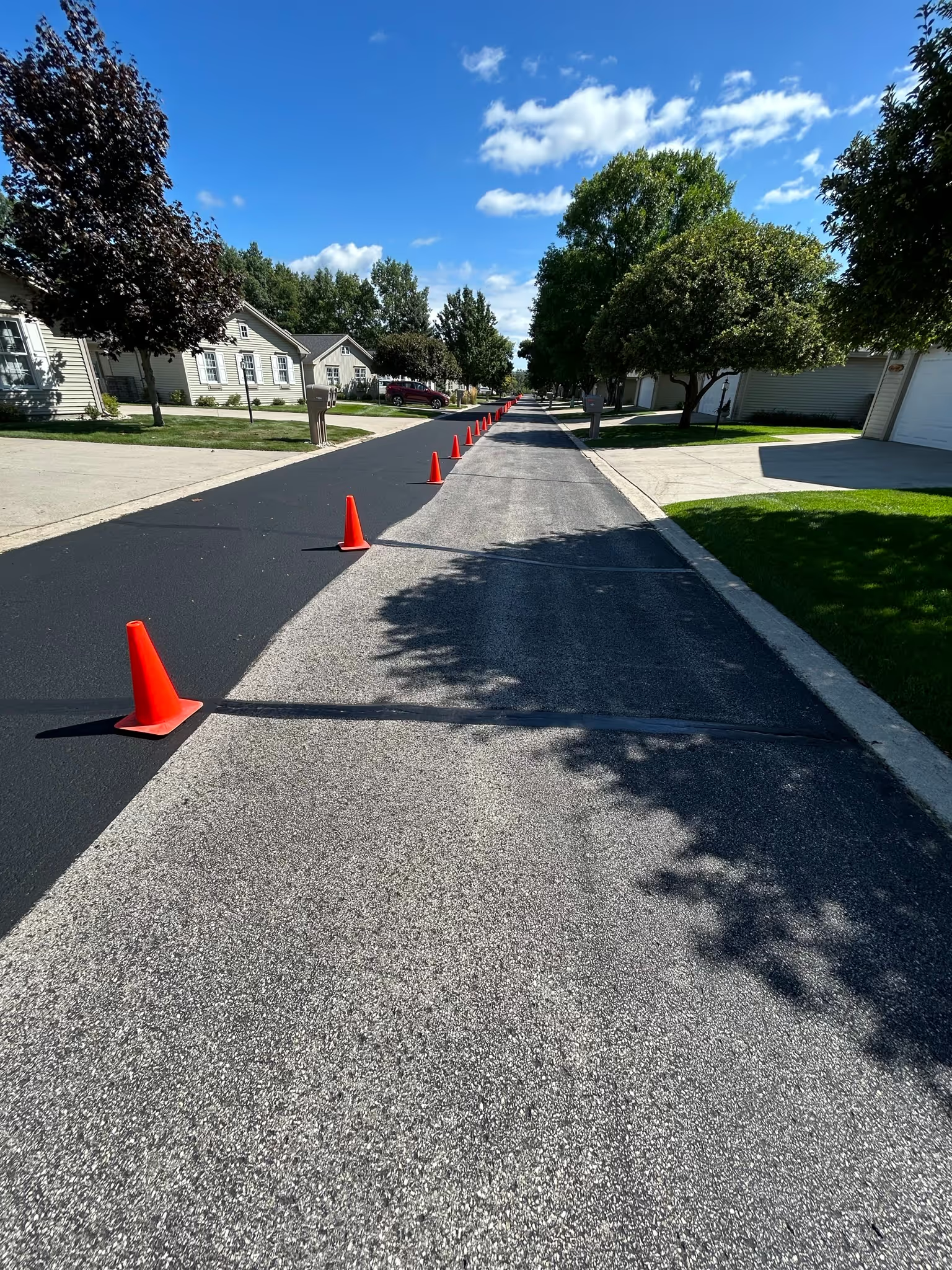
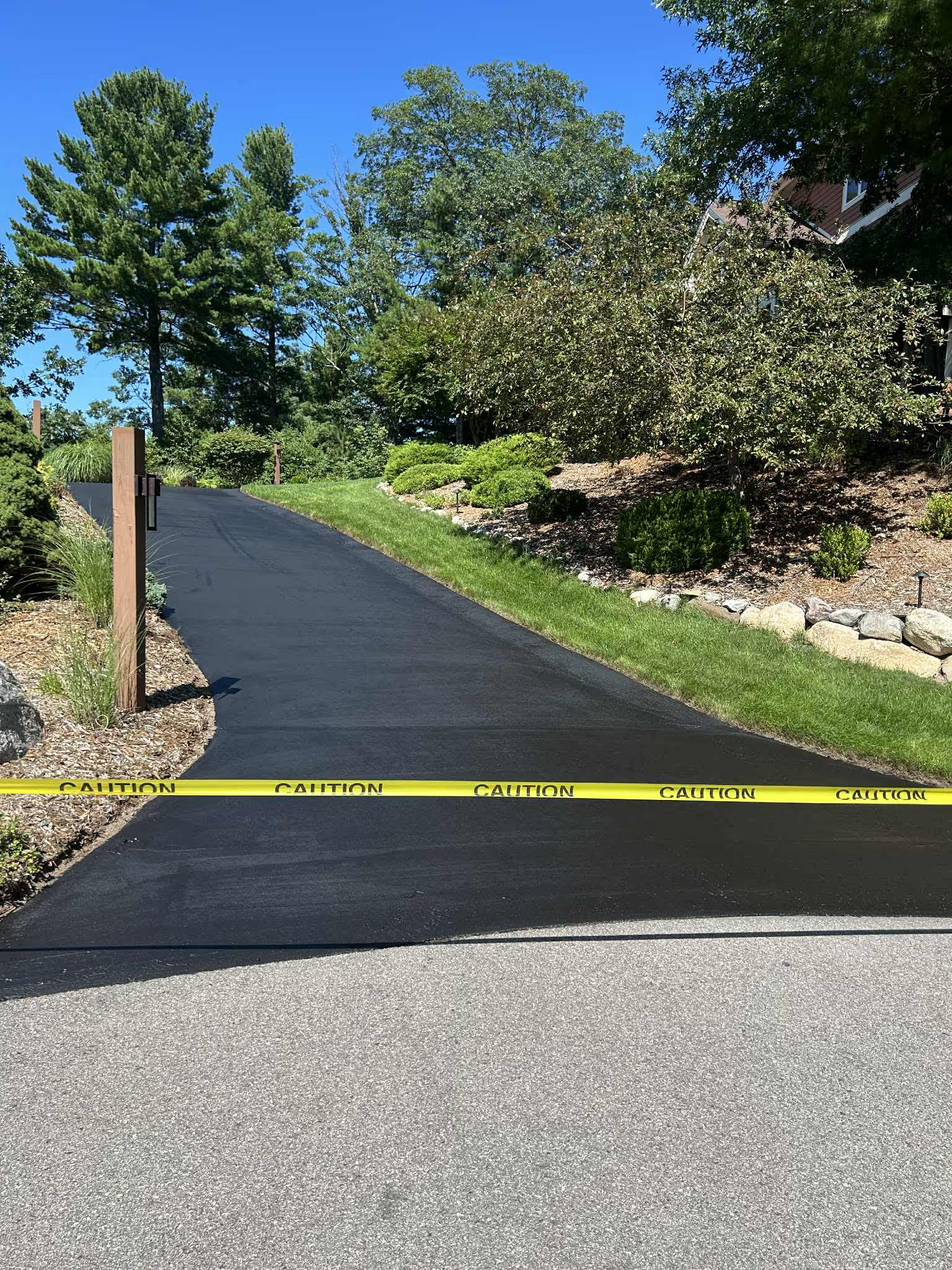
Professional residential asphalt sealcoating in Grand Traverse County, MI, showing a freshly applied jet-black finish protected by caution tape to ensure a perfect cure and long-lasting curb appeal.

Let’s Restore Your Property's Curb Appeal Today

Ready to protect your driveway or parking lot with professional asphalt sealcoating in Traverse City, MI? Grand Traverse Sealcoating & Striping provides detailed prep, professional crack sealing, premium materials, and a proven process designed for Northern Michigan conditions. Whether you need residential driveway sealing or commercial parking lot sealcoating, we are ready to help you protect your asphalt and improve its appearance.

Contact us today to request a free quote for sealcoating your parking lot or driveway in Northern Michigan.

Frequently Asked Questions About Asphalt Parking Lot, Private Drives, & Driveway Sealcoating.

Investing in your asphalt shouldn't be a guessing game. We’ve compiled the most frequent questions from property owners across Northern Michigan to help you make the best decision for your asphalt driveway, parking lot, or private drive.

What is asphalt sealcoating?

Asphalt sealcoating is a professional-grade pavement preservation method that applies a protective liquid armor over your driveway or parking lot. In Northern Michigan, sealcoating acts as a waterproof barrier against the destructive freeze-thaw cycle, UV oxidation, and corrosive road salts. By sealing the asphalt's pores, it prevents the binder from becoming brittle and cracking, effectively doubling the lifespan of your pavement.

Application Methods: What is the difference between Spray, Broom, and Squeegee Sealcoating?

Choosing the right application method is critical for the longevity, safety, and look of your pavement. At Grand Traverse Sealcoating & Striping, we tailor our approach based on the specific layout of your property and the unique demands of our Northern Michigan climate. Here is how we break down the three primary methods:

Spray Application (Our Preferred Method):
We utilize a spray application for all commercial parking lots and many residential driveways. This method allows us to put down a higher volume of sealer, resulting in a thicker, longer-lasting protective layer. Because the sealer is applied in a uniform mist, you won’t see "broom marks" as the sealer naturally wears down over the years.

The "Grass Edge" Rule:
We will spray residential driveways if the edges are grass. Because we use Asphalt Emulsion (which is much safer than old-fashioned coal tar), any minor overspray onto the grass is harmless. Once you mow your lawn, the colored tips are gone. However, if your driveway is bordered by pavers, stone, or delicate landscaping, we switch to a manual method to ensure total precision.

Broom Application:
A broom application involves manually pulling the sealer across the surface with specialized brushes. This is our go-to method for driveways with non-grass edges or in situations where high winds or close-proximity landscaping make spraying a risk. While spraying is our default for its durability and finish, we can always broom-apply your sealer upon request.

Why We Steer Away from Squeegee Application:
While some contractors promote squeegee applications because they "fill every pore," this is actually a major liability in northern climates. By filling every bit of texture in the asphalt, the squeegee creates an extremely smooth, glass-like surface. When the Michigan winter hits, these driveways become dangerously slippery, even if extra sand is mixed in. Both Broom and Spray applications maintain the natural texture of the asphalt, providing the necessary surface grip for tires and foot traffic during icy conditions.

Can you sealcoat a driveway to often?

Yes, you can sealcoat a driveway too often. Applying sealcoat every year creates a thick, brittle layer on top of the asphalt that cannot expand and contract with Northern Michigan’s temperature swings. This leads to "spiderweb" cracking, peeling, and a "mushy" surface. For the best results and longest pavement life, a driveway should only be sealcoated every 2 to 3 years, depending on wear and sun exposure
T
he Dangers of "Over-Sealing"
Asphalt is designed to be flexible. It needs to move as the ground freezes and thaws. When you apply sealcoat too frequently, you lose that flexibility. Here is what happens:

1. Surface Cracking (Check-Cracking)
When sealcoat layers become too thick, the top layer dries much faster than the bottom layers. This tension causes the surface to develop fine, "alligator" style cracks. These aren't structural cracks in your asphalt, but cracks in the buildup of sealer itself. Once this happens, the only way to fix it is often expensive sandblasting or waiting years for it to wear off.

2. Peeling and Flaking
Sealcoat needs to bond to the asphalt pores. If you seal every year, you are simply bonding new sealer to old sealer. Eventually, the bond fails, and the material begins to flake off in large chunks, leaving your driveway looking blotchy and neglected.

3. Structural "Softness"
A common complaint on forums is that sealcoating makes asphalt "soft." This usually happens when a driveway has been over-sealed with low-grade products. The thick buildup traps heat and doesn't allow the pavement to breathe, which can make the surface feel tacky or soft during the peak of a Traverse City summer.

How often should asphalt be sealcoated?

In the Grand Traverse region, the lifespan of a professional sealcoat application typically ranges from 2 to 4 years for residential driveways and 1 to 3 years for commercial parking lots. Because Northern Michigan experiences extreme freeze-thaw cycles, the asphalt binder—the "glue" holding your pavement together—oxidizes and becomes brittle faster than in milder climates

Residential vs. Commerical Asphalt Sealcoating Lifespans

Not all pavement is treated equal. The frequency of your maintenance cycle depends on the type of use:

Residential Driveways (2–4 Years):
With standard passenger vehicle use, our Armor-Bond process provides deep protection for several seasons. If your pavement has turned from jet-black to a "dry gray," it is a sign of UV oxidation, and a fresh coat is required to prevent water from penetrating the pores.

Commercial Parking Lots (1–3 Years):
High-traffic environments—such as retail centers, restaurants, and industrial lots—experience constant friction wear. Heavy turning movements and high vehicle volume strip away the protective layer faster, requiring a more frequent 1-to-2-year maintenance cycle to maintain ADA compliance and structural integrity.

Why the Range Varies: The Northern Michigan Factor

The lifespan of your sealcoat is dictated by four main variables:

1. Vehicle Traffic Volume: The more "tires on the ground," the faster the friction wears down the sealer

.2. Weather & UV Exposure: Northern Michigan’s intense summer sun accelerates oxidation, while winter moisture expands in the asphalt pores creating friciton

3. Snow Removal Methods (Crucial):
How you move snow matters. Snow Plowing is highly abrasive; the metal edges of a plow scrape the surface, naturally thinning the sealer over time. Conversely, Snow Blowing is much gentler on the surface and can extend the life of your asphalt sealcoat.

Property Grade & Drainage:
Steep driveways or lots with poor drainage experience more "washout" and salt accumulation, which can degrade the asphalt sealer faster than flat, well-drained surfaces.

Does sealcoating affect the structural integrity of asphalt?

You may have read online that sealcoating "traps oils" or makes asphalt "soft," leading some to believe it actually damages the driveway. When performed correctly by professionals using high-quality materials, this couldn't be further from the truth. The myth of sealcoating "ruining" asphalt usually stems from over-application.

Busting the "Trapped Oils" Myth
Asphalt is a mixture of rock, sand, and bitumen (oil). The oil is the "glue" that keeps the driveway flexible.

The Reality: You want to keep the oils in. When asphalt is left exposed to Northern Michigan’s sun and oxygen, those oils evaporate (oxidation). This is why old asphalt turns grey and becomes brittle like a dry cracker.

The Protection: Sealcoating acts as a "sunscreen," stopping the oils from escaping. It doesn't "trap" them in a harmful way; it prevents them from being destroyed by the elements.

Why Does Some Asphalt Feel Soft After Sealing?

If you’ve seen a driveway that felt "soft" or "sticky" after being sealed, it is usually due to one of three professional errors:

Over-Sealing: Some homeowners seal their driveway every single year. This builds up a thick, brittle "shell" that doesn't allow the pavement to expand and contract. You should only seal every 2–3 years.

Coal Tar vs. Emulsion: Old-school coal tar sealers are high in VOCs and can remain "tacky" for a long time. We use Asphalt Emulsion, which is chemically compatible with your driveway, dries faster, and won't make your pavement feel soft or "mushy.

"Improper Cure Time: If a contractor uses too much water or applies the sealer too thick in a shaded area, the bottom layer stays wet, making the surface feel soft to the touch.

Our Approach: We follow the Asphalt Armor System, which ensures we never "over-apply" material. We analyze the porosity of your driveway first. If your asphalt is still rich, black, and healthy, we’ll tell you to wait another year. We only seal when the pavement actually needs that protective barrier to prevent oxidation and water penetration.

Does asphalt sealer become slippery when wet or in the winter?

1. Coal Tar vs. Asphalt Emulsion
Many budget contractors still use coal tar sealer, which is a byproduct of the coking industry. It is not eco-friendly and dries into a very smooth, glass-like surface. When water or ice hits coal tar, there is zero natural friction. Our SafeSeal™ asphalt emulsion is chemically identical to your driveway’s asphalt, meaning it retains a natural, rubberized "bite" even before we add traction agents.

2. The "Sand" Factor
The most common reason for a slippery driveway is a contractor cutting corners on silica sand.

The Shortcut: Sand is heavy and hard on spray equipment. Some crews use very little sand (or none at all) to save money and make the sealer easier to pump.We treat sand as a mandatory ingredient, not an option. The silica sand suspended in our sealer acts like thousands of tiny anchors for your shoes and tires.

Special Traction for Steep Driveways
In the Grand Traverse region, we have plenty of hills. If you have a steep driveway, a "standard" mix might not be enough for a Michigan winter.

Custom Mixing
For inclined surfaces, we mix in extra silica sand to create a high-friction surface. This ensures that even when the driveway is wet or covered in a light dusting of snow, your vehicles can maintain traction and your family can walk safely to the mailbox.

The Bottom Line: Safety First
At Grand Traverse Sealcoating & Striping, we live and work in this climate. We know that a beautiful black driveway is only "premium" if it’s safe to walk on. By using SafeSeal™ and the proper ratio of industrial-grade sand, we provide a finish that looks like a new road and grips like one, too.

What is the difference between driveway sealing vs sealcoating?

Technically, sealcoating refers to the application of a protective coating on asphalt (blacktop) driveways, whereas driveway sealing typically refers to the clear penetrative sealants used on concrete driveways. However, in common conversation, the terms are frequently interchanged to describe the general process of protecting any residential or commercial driveway from the elements.

What is the difference between asphalt sealcoating and paving?

Sealcoating is a preventative maintenance layer applied to existing asphalt to extend its life, while paving is a full-depth replacement. Sealcoating is roughly 5% of the cost of repaving.

Does sealcoating protect against Michigan road salt?

Yes. In fact, protecting against road salt and liquid de-icers is one of the primary reasons to sealcoat your driveway or parking lot in Northern Michigan. Without a professional seal, road salt is one of the fastest ways to destroy a healthy asphalt surface.

Sealcoating provides a critical chemical-resistant barrier against Michigan road salt. Road salt (sodium chloride) and liquid de-icers act as "oxidizers" that break down the oils (bitumen) holding your asphalt together. A professional application of asphalt emulsion sealcoat prevents these salts from penetrating the surface, stopping corrosion and protecting the pavement from the accelerated damage caused by winter freeze-thaw cycles.

Will sealcoating make my driveway look brand new again?

The short answer is: It depends on the current condition of your asphalt. While sealcoating is the best way to restore "curb appeal," it is a protective layer, not a structural resurfacer.If your driveway is relatively smooth with only minor fading, sealcoating will provide a stunning, jet-black finish that makes it look virtually brand new.

Aged or Damaged Asphalt
If your driveway has "alligator cracking" (spiderweb patterns), deep pits, or significant oil stains, sealcoating will restore the rich black color, but the texture of the damage will still be visible. Think of it like a fresh coat of paint on a dented car—the color looks great, but the "dents" remain.

The Benefit of Restored Color
Regardless of the surface texture, a professional application of asphalt emulsion (like our SafeSeal™ system) instantly hides the grey, oxidized look of old pavement. It provides a uniform, high-contrast finish that makes your landscaping pop and gives your property an immediate face-lift.

The Bottom Line: Sealcoating is a "liquid face-lift." It will make any driveway look significantly better and more uniform, but the closer the asphalt is to its original structural integrity, the closer to "brand new" the final result will appear.

What are the differences between Coal Tar vs Asphalt Emulsion Sealer?

The primary difference is safety and environmental impact. Coal tar is a byproduct of coal processing that contains high levels of PAHs (Polycyclic Aromatic Hydrocarbons)—toxic chemicals that the EPA classifies as probable human carcinogens. Because coal tar degrades into a toxic dust that can be tracked into homes and leached into Michigan’s watersheds, it is increasingly being banned across the U.S.

At Grand Traverse Sealcoating & Striping, we use SafeSeal™, a Michigan-made asphalt emulsion.Here is the breakdown of why this is the superior choice for the 45th parallel.


Health & Safety:
SafeSeal™ is nearly PAH-free, odorless, and won't cause the chemical skin burns common with coal tar. It is the only responsible choice for residential driveways, schools, and restaurants.

Environmental Protection:
Our emulsion is non-toxic to aquatic life, protecting the local lakes and rivers that define Northern Michigan.

Performance:
Modern asphalt emulsions have evolved to match or exceed coal tar in durability and UV resistance. SafeSeal™ provides a deep, jet-black finish that remains flexible, preventing the "brittleness" that causes coal tar to flake prematurely in our extreme freeze-thaw cycles.

Michigan-Engineered:
Because SafeSeal™ is formulated in Grand Rapids, it is specifically designed to handle the unique humidity and temperature swings of the Great Lakes region.

How should I prepare for an asphalt repair or sealing appointment?

Pre-Service Checklist: Preparing for Your Armor-Bond Application
To ensure a perfect bond and a flawless finish, please follow these mandatory preparation steps before our crew arrives.

Vehicle Clearance:
Ensure all vehicles are removed from the driveway or parking lot at least 2 hours prior to your scheduled start time.

Irrigation Lockdown:
Deactivate all lawn sprinklers 24 hours in advance. Moisture is the enemy of fresh sealer; the pavement must be bone-dry for the SafeSeal™ to adhere.

Fertilizer Warning:
Do not fertilize your lawn for at least 5 days prior to our service. The chemicals in fertilizers can react with the sealer, causing discoloration or adhesion failure at the edges.

How long before you can drive of fresh sealocoating?

For the best results in Northern Michigan, we recommend waiting 24 to 48 hours for our SafeSeal™ emulsion to fully cure before allowing vehicle traffic. However, the exact timing depends on several environmental factors unique to your property:

Sun vs. Shade:
Driveways with full sun exposure cure the fastest. If your driveway is heavily shaded by trees or sits on the north side of a building, the evaporation process is slower, and you should lean closer to the 48-hour mark.

Ambient Temperature:
In the peak of a Traverse City summer (80°F+), the sealer may feel dry to the touch quickly, but it remains "tender" for longer. On cooler spring or fall days, the cure time is extended due to lower surface temperatures.

The "Tire Tracking" Risk:
On extremely hot days, even if the sealer is dry, the asphalt can retain enough heat to keep the sealer soft. We recommend waiting the full 48 hours during heatwaves to reduce tire tracking or power-steering scuffs caused by heavy vehicles turning their wheels while stationary.

Foot Traffic:
You can typically walk on your driveway within 4 to 8 hours of application, provided there are no heavily shaded "wet spots."

Is it normal to see tire marks on a freshly sealed driveway?

Yes, seeing scuff marks (known as tire tracking) is a completely normal part of the asphalt sealer curing process. While your driveway is ready for traffic in 24–48 hours, it takes approximately 30 days for the SafeSeal™ asphalt emulsion sealer to fully cure and reach its maximum hardness. During this initial 30-day "tender" period, the sealer is still chemically settling.

You may notice scuffs or tracking if:

Stationary Turning: You turn your vehicle's steering wheel while the tires are not moving.

Sharp Maneuvering: You make tight, aggressive turns in a short radius.

Heavy Loads: Large vehicles, such as delivery trucks or SUVs, exert high pressure on the "fresh" surface.

How to Prevent Tracking:
The best defense is diligent driving. For the first few weeks, try to ensure your vehicle is in motion before turning the steering wheel (avoid "dry" steering).

The Good News:
Tire tracking is not permanent and does not mean your sealer is failing. These marks are purely aesthetic and will naturally "blend in" and disappear as the sealer continues to weather and cure. Even after the 30-day mark, you may notice slight tracking on the hottest days of your first summer, but these marks will vanish more quickly as the pavement ages and stabilizes.

When should new asphalt be sealcoated?

New asphalt requires a curing period to release volatile oils; we advise waiting 6 months before getting your first sealcoat applicaiton.

Do oil spots need to be treated before sealcoating?

Oil and gas stains must be cleaned and primed before sealcoating. Because oil is a solvent, it breaks down the bitumen binder in asphalt, making it soft and preventing new sealer from bonding. To treat these spots, the surface should be scrubbed with a degreaser, thoroughly dried, and then coated with a specialty oil spot primer to create a barrier that allows the new sealcoat to adhere properly

What is the best time to sealcoat asphalt in Northern Michigan?

For a professional-grade application in Northern Michigan, both ground and air temperatures must be at least 50°F and rising. Because our SafeSeal™ is a water-based emulsion, it relies on evaporation to form a molecular bond with the asphalt. While a standard 24-hour dry window is ideal, we utilize advanced copolymer additives like Iron Road and Black Elixir to accelerate curing, increase oil resistance, and allow for faster reopening of commercial lots.

The "50 and Rising" Rule:
It isn’t enough for the air to be warm; the ground temperature dictates the bond. Applying sealer to a cold surface "shocks" the emulsion, causing it to flake. We monitor surface temps to ensure they remain above 50°F throughout the application and the first four hours of the cure.

The Chemistry of Speed (Additives):
We don't just "hope" for good weather. We integrate Black Elixir™ and Iron Road copolymer additives into our mix .Black Elixir™ can accelerate curing by up to 80%, allowing us to reopen commercial lots in a fraction of the time. Iron Road toughens the finish and improves "tenacity," making the sealer more resistant to power-steering marks and fuel spills.

The Heat & Rain Paradox:
While we generally require a 24-hour dry window, there is a unique exception. On an extremely hot, full-sun summer day, a light rain a few hours after application can actually be beneficial. The moisture helps slow down an aggressive cure, preventing the sealer from becoming brittle and creating a much tougher, more flexible bond.

The Northern Michigan Season:
Our season on the 45th parallel typically runs from Mid-May through early October. Because we evaluate radar, humidity, and ground temps hourly, scheduling can be a challenge. We may need to reschedule your application to avoid a "washout," but we prioritize the quality of your Armor-Bond finish over hitting a date on the calendar.

How long will my asphalt last in Northern Michigan?

Properly maintained asphalt can last 25 to 30 years, whereas neglected surfaces often deteriorate within 10 to 15 years due to the region's aggressive freeze-thaw cycles..

Does asphalt sealcoating fix or fill exisiting cracks?

No. Sealcoating is a preventative measure, not a repair for structural damage. Existing cracks must be filled or sealed before the sealcoating process begins to prevent the material from failing. We use 380° liquified hot-rubberized crack sealant to fill cracks between 1/8" and 1" wide before applying the sealcoat.

What size asphalt cracks can be fixed?

Asphalt cracks must fall within the "Maintenance Window." At Grand Traverse Sealcoating & Striping, we follow a strict "1/8 to 1-Inch Rule" to ensure your asphalt survives the Northern Michigan freeze-thaw cycle.

1. The Lower Limit: Cracks Smaller Than 1/8”
Cracks less than an 1/8-inch wide are too narrow for 380° hot-rubberized sealant to penetrate. Because the rubber cannot get deep enough into the crack to "grip" the sidewalls, it sits on the surface. On a hot Traverse City summer day, vehicle tires can actually stick to this surface-level rubber and pull it right out of the crack. For these hairline fractures, our SafeSeal™ topcoat is the best defense, providing a topical seal to keep moisture out.

2. The Upper Limit: Cracks Wider Than 1” (Structural Failure)
If a crack has opened wider than one inch, it is no longer a maintenance issue—it is a structural failure. At this width, the asphalt or the gravel sub-base beneath it has likely been compromised. Filling a 1-inch+ gap with rubber is a "band-aid" fix; the sealant will eventually sink and fail as the ground moves.

The Solution:
These areas require a professional "Remove and Replace" repair. We saw-cut the failed section, remove the debris, and install fresh, hot-mix asphalt to restore the structural integrity of your surface.

3. The "Goldilocks Zone": 1/8” to 1”
This is where our Deery Super-Stretch hot rubber shines. Within this range, the sealant can properly bond to the asphalt, remaining flexible enough to expand and contract during extreme temperature swings without losing its grip.

Why is prep work so important before sealcoating?

Sealcoating bonds best to a clean, properly prepared surface. Dirt, flaking material, moss, debris, untreated stains, and poorly prepared cracks all reduce the quality and longevity of the final result.